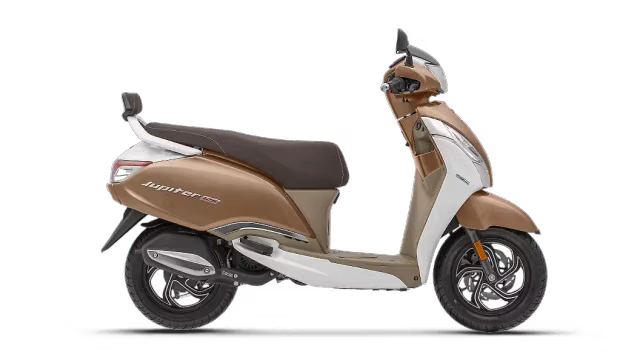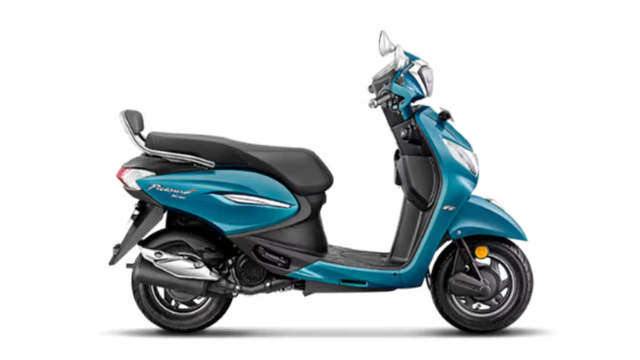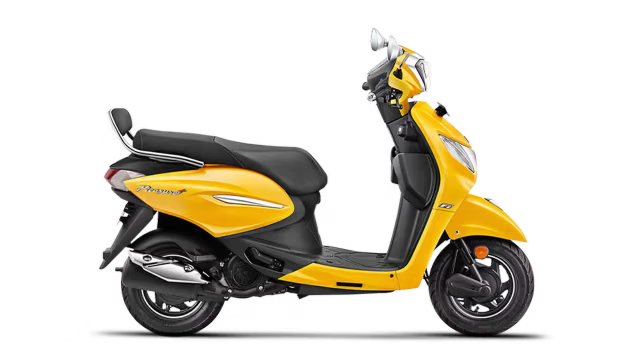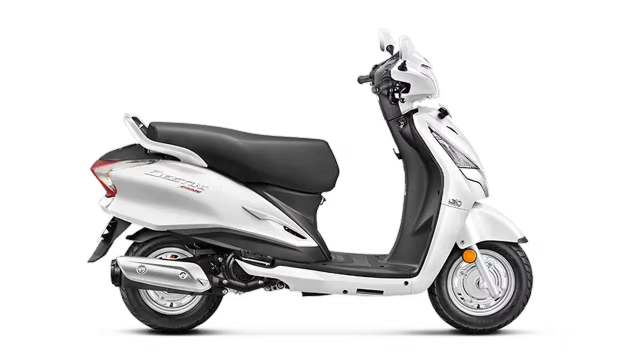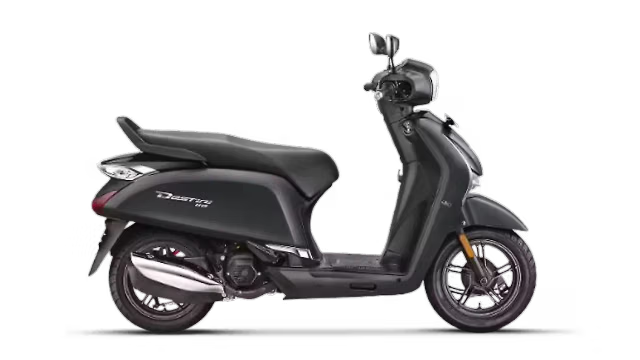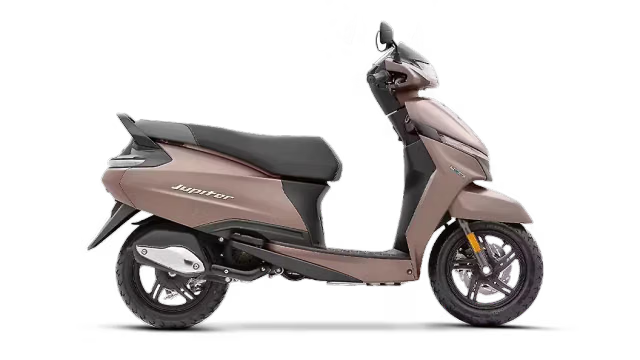
TVS JupitervsTVS Jupiter 125
Our AI recommends
TVS Jupiter 125
62% Match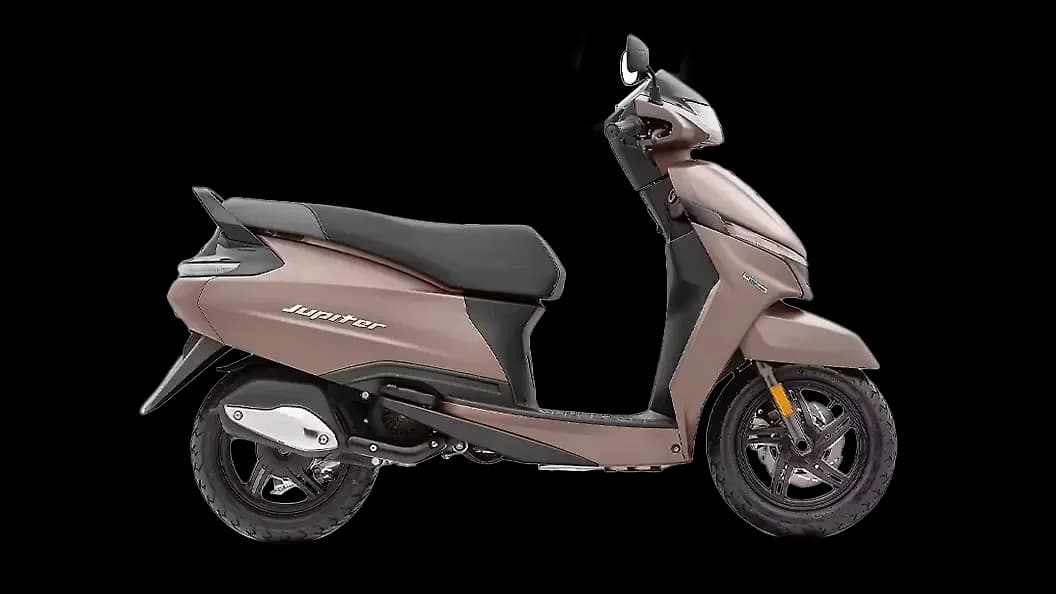
TVS Jupiter
Drum- OBD 2B
₹73,550 - ₹87,550
Ex-showroom price
Superior Fuel Efficiency
The Jupiter returns a higher ARAI-rated 53.84 kmpl versus the Jupiter 125's 50 kmpl, meaning more distance per litre.
Lower Ex-Showroom Price
At ₹73,975, the Jupiter is about ₹7,125 cheaper than the Jupiter 125, making it the more budget-friendly option.
LED Brake/Tail Light
The Jupiter gets a full LED brake/tail light setup, while the Jupiter 125 uses a halogen bulb for this function.
AI Match
TVS Jupiter 125
- 68%
Performance
- 72%
Comfort
- 78%
Efficiency
- 78%
Features & Tech
- 64%
Safety
- 75%
Ownership
- 80%
Practicality
- 70%
Value
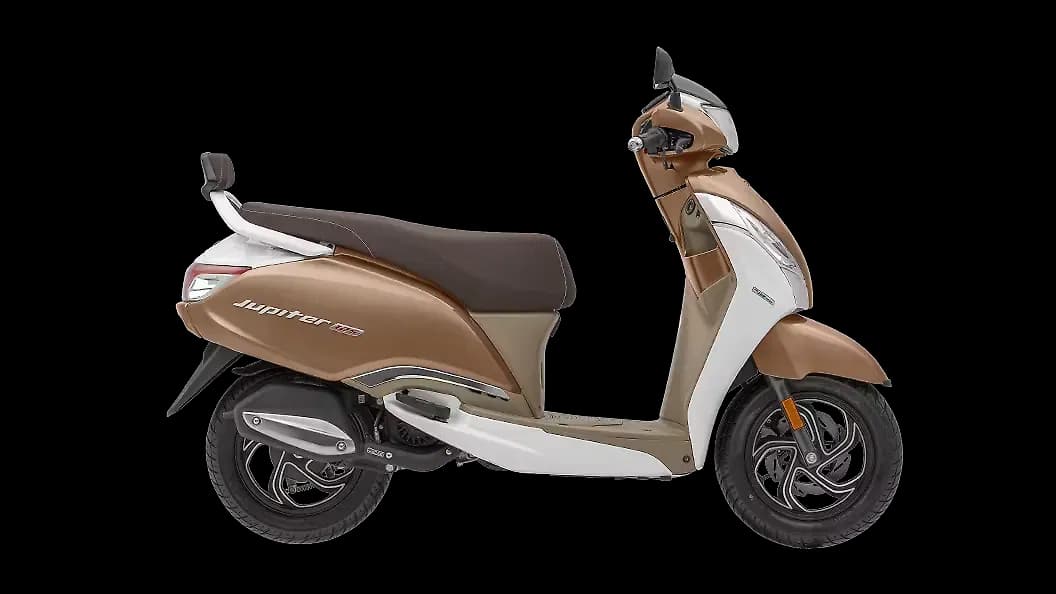
TVS Jupiter 125
Drum - Alloy Wheel
₹78,100 - ₹88,060
Ex-showroom price
Bigger, Punchier Engine
The Jupiter 125's 124.8cc engine produces 8.04 bhp and 10.5 Nm of torque, both higher than the Jupiter's 113.3cc unit's 7.91 bhp and 9.8 Nm.
Higher Top Speed
The Jupiter 125 tops out at 95 kmph, a clear step up from the Jupiter's 82 kmph for those wanting more highway pace.
Fully Digital Instrument Console
It features an LCD semi-digital display with brightness control, distance-to-empty, dual digital tripmeters, and real-time mileage indicator, versus the Jupiter's basic analogue cluster.
Which one describes you?
Tell us how you drive. Your daily use changes the recommendation.
Personalised recommendation
Daily CommuterYour AI pick
TVS Jupiter
The Jupiter is cheaper to buy and sips less fuel per the ARAI figures, making it the smarter pick for pure office-to-home commuting where running costs matter most.
See Full ComparisonWhy Jupiter for you?
Lower purchase price
At Rs 73,975 ex-showroom, the Jupiter is about Rs 7,000 cheaper than the Jupiter 125, easing the upfront cost for a daily runabout.
Better fuel efficiency
53.84 kmpl ARAI mileage beats the Jupiter 125's 50 kmpl, which adds up over daily commuting distances.
Light and nimble
At 105 kg kerb weight it's slightly lighter than the 125's 108 kg, helping with quick manoeuvring through traffic.
Every vehicle has a different personality.
Find out how the TVS Jupiter and TVS Jupiter 125 stack up across key factors and see what makes each of them unique.
TVS Jupiter 125 pulls ahead overall
The Jupiter 125 pulls ahead on performance and features/tech thanks to its larger engine, alloy wheels, and digital cluster, while the original Jupiter claws back ground on efficiency and value due to its lower price and better ARAI mileage.
Bigger, Punchier Engine
The Jupiter 125's 124.8cc engine produces 8.04 bhp and 10.5 Nm of torque, both higher than the Jupiter's 113.3cc unit's 7.91 bhp and 9.8 Nm.
Higher Top Speed
The Jupiter 125 tops out at 95 kmph, a clear step up from the Jupiter's 82 kmph for those wanting more highway pace.
Fully Digital Instrument Console
It features an LCD semi-digital display with brightness control, distance-to-empty, dual digital tripmeters, and real-time mileage indicator, versus the Jupiter's basic analogue cluster.
A Trade-off
The Jupiter returns a higher ARAI-rated 53.84 kmpl versus the Jupiter 125's 50 kmpl, meaning more distance per litre.
Strengths that matter every day.
A side-by-side look at what each one does best, so you can choose what fits your needs.
TVS Jupiter
Strengths for those who prioritise efficiency, value and safety.
Superior Fuel Efficiency
The Jupiter returns a higher ARAI-rated 53.84 kmpl versus the Jupiter 125's 50 kmpl, meaning more distance per litre.
Lower Ex-Showroom Price
At ₹73,975, the Jupiter is about ₹7,125 cheaper than the Jupiter 125, making it the more budget-friendly option.
LED Brake/Tail Light
The Jupiter gets a full LED brake/tail light setup, while the Jupiter 125 uses a halogen bulb for this function.
Lighter Kerb Weight
At 105 kg, the Jupiter is 3 kg lighter than the 108 kg Jupiter 125, which can aid nimbleness and parking ease.
Longer Riding Range
With a 249.9 km riding range, the Jupiter slightly edges out the Jupiter 125's 244.8 km range on a full tank.
TVS Jupiter 125
Strengths for those who prioritise power, range and value.
Bigger, Punchier Engine
The Jupiter 125's 124.8cc engine produces 8.04 bhp and 10.5 Nm of torque, both higher than the Jupiter's 113.3cc unit's 7.91 bhp and 9.8 Nm.
Higher Top Speed
The Jupiter 125 tops out at 95 kmph, a clear step up from the Jupiter's 82 kmph for those wanting more highway pace.
Fully Digital Instrument Console
It features an LCD semi-digital display with brightness control, distance-to-empty, dual digital tripmeters, and real-time mileage indicator, versus the Jupiter's basic analogue cluster.
Premium Alloy Wheels
The Jupiter 125 rides on alloy wheels while the Jupiter sticks with steel wheels, adding a sportier look and typically better heat dissipation.
Modern LED Lighting Touches
It adds LED turn signals and DRLs (daytime running lights), features absent on the Jupiter which uses halogen turn signals and has no DRLs.
Features that matter every day.
Instead of counting features, we compare which ones each vehicle actually includes.
Power & Performance
Brakes & Wheels
Suspensions & Chassis
Warranty and Services
Dimensions
Safety & Convenience
Mobile App Monitoring
Lights
Seat & Storage
Additional Features
Instrument Cluster