Two-Wheeler Insurance Renewal: Comprehensive vs Third-Party

Key Takeaways
- Missing your two-wheeler insurance renewal deadline leaves your vehicle uninsured on the road. If you do not renew the policy within 90 days, your accumulated No Claim Bonus goes back to zero under standard rules, costing up to 50% in Own Damage renewal discounts.
- Lowering your bike’s declared value by 15-20% saves you a few hundred rupees on the insurance premium, but limits your payout in the event of total loss or theft.
- Common pitfalls to avoid during your bike insurance renewal include: missing the deadline, opting for low premiums, setting an exceptionally low or high IDV, ignoring NCB discounts, not comparing current market rates and policy terms, and providing incorrect vehicle and personal details.
Comprehensive vs. Third-Party: Which Cover Fits Your Two-Wheeler Insurance Renewal?
Two-wheeler insurance renewal allows you to review your existing coverage, update personal and vehicle details, and adjust your own-damage or comprehensive protection. In India, policy duration and requirements depend on whether you are insuring a new vehicle or renewing an existing bike on an annual or multi-year basis.
A comprehensive two-wheeler insurance policy is ideal for newer or high-value bikes, as it covers own-damage repairs and theft. You can switch to a standalone third-party insurance policy when your bike’s depreciated market value makes own-damage coverage and repairs too costly to insure.
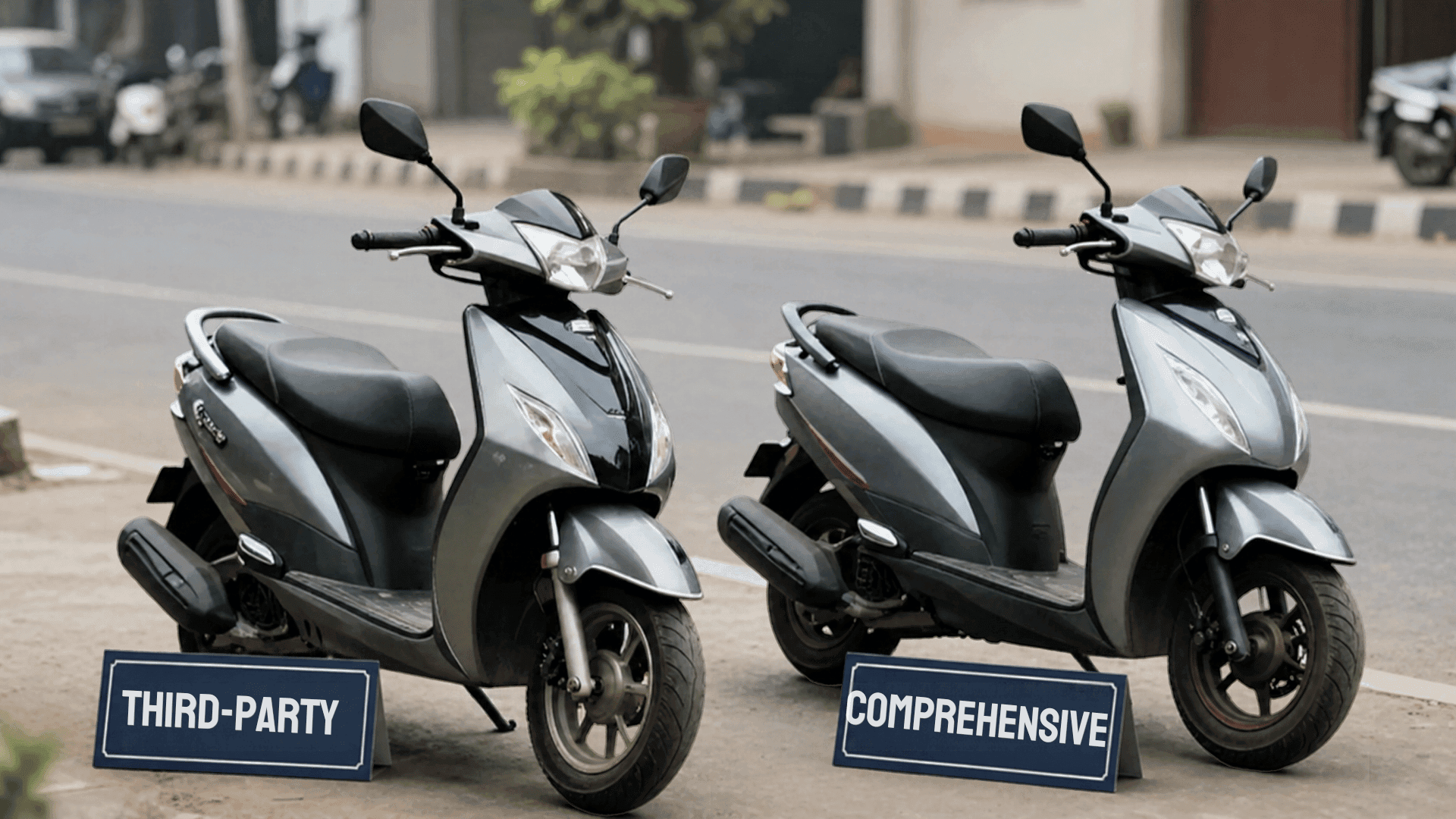
Under the Motor Vehicles Act, 1988, third-party insurance is mandatory for every vehicle plying on the roads. Riding without valid third-party insurance can attract legal penalties of up to ₹2,000-4,000. The policy covers liability for bodily injuries or death caused to another person and up to ₹7.5 lakh for third-party property damage. However, it does not cover damage to your own bike or scooter. A comprehensive policy combines mandatory third-party liability with Own Damage protection. This covers accidental collisions, theft, fire, flood, and vandalism.
| Parameter | Third-Party Insurance | Comprehensive/Package Insurance |
| Legal requirement | Mandatory | Not independently mandatory |
| Injury or death to third parties | Covered, subject to policy terms | Covered, subject to policy terms |
| Third-party property damage | Covered, subject to policy limits | Covered, subject to policy limits |
| Own vehicle accident damage | Not covered | Covered, subject to exclusions |
| Theft of insured vehicle | Not covered | Covered, subject to policy terms |
| Fire and natural calamities | Not covered for own vehicle | Covered under applicable policy terms |
| No Claim Bonus (NCB) | Not available | Available on eligible own-damage premium |
What Should You Check During Two-Wheeler Insurance Renewal?
At the time of two-wheeler insurance renewal, you should review the vehicle’s IDV, add-on covers, expiry date, and personal details to avoid claim rejections, grab discounts, and ensure complete financial protection.
- Check the expiry of the third-party and own-damage components separately.
- Verify the declared value against your vehicle’s age, depreciation, and current market value. While a lower IDV can reduce the insurance premium, it may also reduce compensation in a total loss claim.
- Check if the No Claim Bonus accumulated over time has been applied correctly.
- Review add-on options, such as zero depreciation, engine protection, and roadside assistance, wherever applicable.
- Confirm your personal details, such as registration number, engine and chassis number, contact number, and address.
- Check the compulsory and voluntary deductibles specified in the policy schedule.
Common Mistakes to Avoid During Two-Wheeler Insurance Renewal
An insurance renewal may seem like a routine task, but even a small mistake, like not availing NCB discounts, coverage gaps, or incorrect information in the policy, can cause trouble and lead to claim rejection. Avoid these common mistakes during your two-wheeler insurance renewal:
- Missing the Deadline: Do not assume that your insurance coverage will continue during a grace period. A lapsed policy does not protect against incidents that occur during the uninsured period. Your insurance provider may conduct a thorough inspection before issuing fresh Own Damage cover.
- Opting for the Lowest Premium: A low premium may seem attractive, but it can have a lower IDV, fewer add-ons, or higher deductibles. Therefore, it is important to look beyond the price and compare the policy schedule and coverage.
- Overlooking NCB Benefits: Not opting for a two-wheeler insurance renewal early or within the grace period (typically 90 days), or failing to transfer or apply your No Claim Bonus discounts, can significantly increase your premiums.
- Choosing an Unrealistic IDV: Choosing an exceptionally low declared value just to lower the initial premium can lower your compensation in the event of theft or total loss. However, setting a high IDV won’t guarantee a larger payout either, as it only increases your premium and risks claim disputes.
- Overlooking Policy Exclusions: A comprehensive insurance policy does not cover all kinds of damage. It generally excludes wear and tear, electrical or mechanical breakdown, consequential loss and damage while riding in an intoxicated state.
- Providing Incorrect Details: Small mistakes, such as a typing error or a misspelt name, an incorrect engine/ chassis number, or registration number, during your two-wheeler insurance renewal can prompt the insurer to reject the claim.
- Not Comparing Quotes & Policy Terms: Blindly repeating your previous two-wheeler insurance plan without comparing current market rates, deductibles, or cashless garage networks can cause you to miss out on better coverage at a low price.
Choosing between third-party and comprehensive insurance policies depends on your two-wheeler’s age, value and required coverage. While a third-party insurance fulfils the legal requirements, a comprehensive cover offers broader financial protection against theft, accidents and other damages. Compare both types of coverage, IDV, NCB benefits, add-ons and policy exclusions before getting a two-wheeler insurance renewal. Most importantly, renew on time and cross-check all policy details to avoid coverage gaps and claim rejections.
FAQs
Can I switch insurers during two-wheeler insurance renewal?
Yes, you can choose a different insurer at the time of policy renewal, subject to its underwriting requirements. Be sure to provide accurate details of your previous policy and claim, and ensure that NCB discounts are transferred correctly.
Can I renew only the own-damage component of my bike insurance?
Yes, you may only renew the own-damage component of your bike insurance through a Standalone Own Damage policy, provided you already have a valid and active mandatory third-party cover.
Does NCB apply to third-party insurance?
No, NCB discounts only apply to Own Damage policy premiums. They do not lower third-party insurance premiums.
Is a separate five-year policy required every time I renew my bike insurance?
No, a separate 5-year third-party policy is not required for a two-wheeler insurance renewal every time. The IRDAI mandates third-party coverage only when you purchase a new vehicle. After the policy expires, you can choose to renew it annually or select another multi-year tenure depending on your preference and coverage requirements.
What happens if you miss your two-wheeler insurance renewal date?
If your two-wheeler insurance policy expires without renewal, you will be at financial risk due to loss of coverage and may incur legal penalties under the Motor Vehicles Act 1988 if your bike or scooter is involved in an accident during the lapsed period.