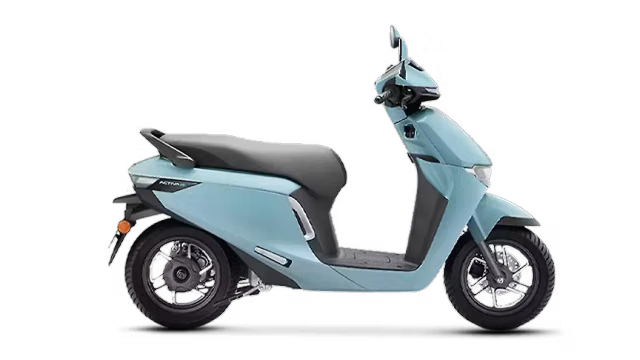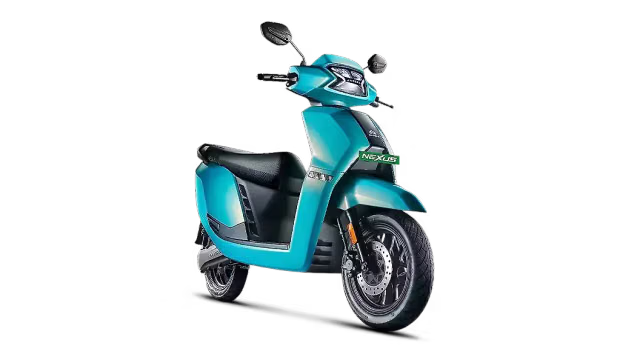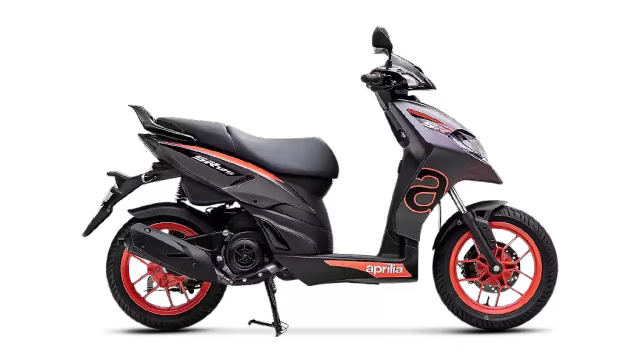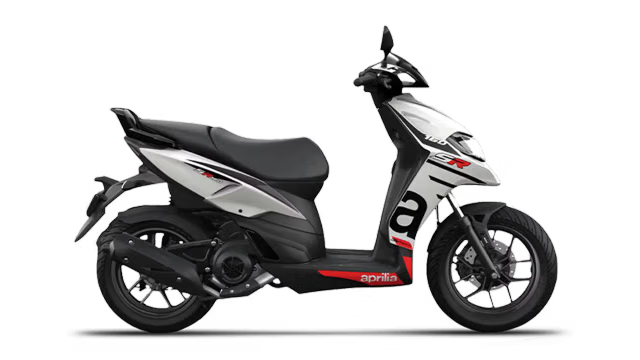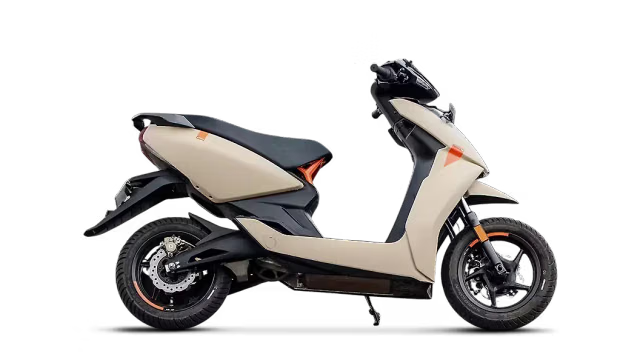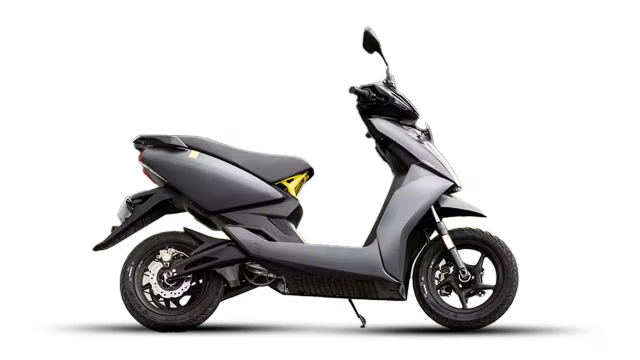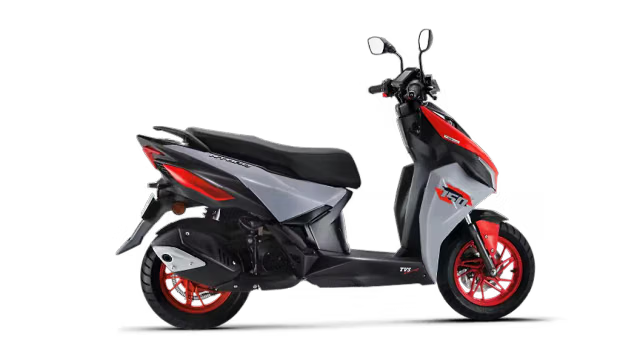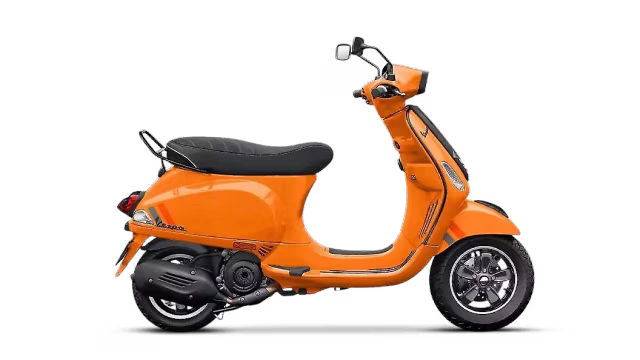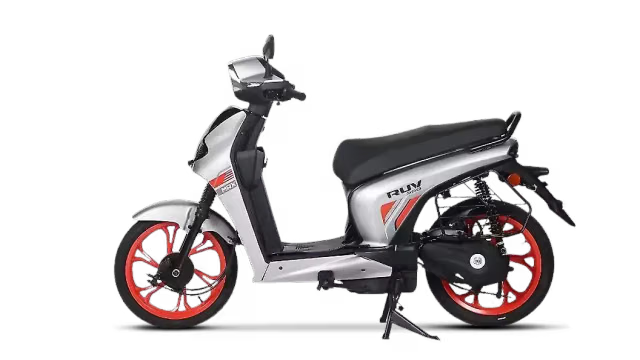
BGauss BG RUV 350vsHero Xoom 160
Our AI verdict
It's a close call
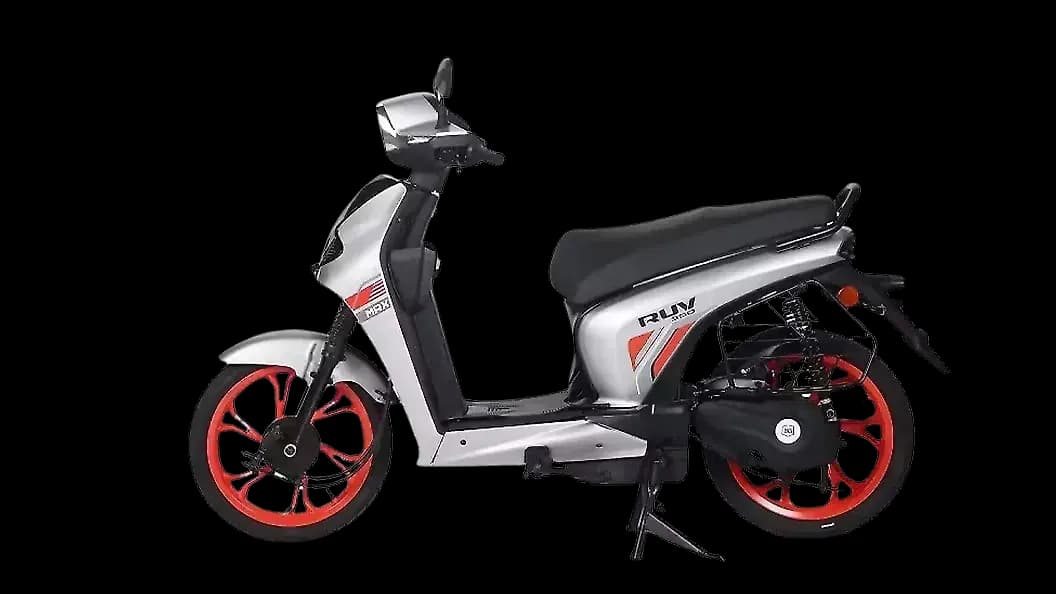
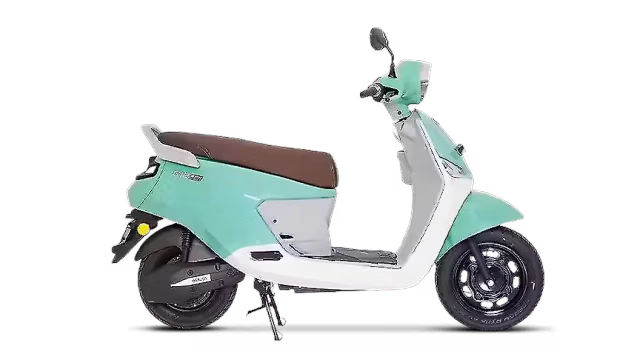
BGauss BG RUV 350
Max
₹1.2 - ₹1.4 Lakh
Ex-showroom price
Instant High Torque
The PMSM motor delivers 160 Nm of torque, dramatically higher than the Xoom 160's 14 Nm, giving stronger off-the-line acceleration feel typical of EVs.
Multiple Riding Modes
Eco, Ride and Sport modes let riders tune performance and range, a flexibility the Xoom 160 lacks entirely with no riding modes.
Cruise Control & Hill Assist
It comes with cruise control, hill assist and reverse mode, conveniences absent on the Xoom 160.
AI Match
It's a tie
- 68%
Performance
- 58%
Comfort
- 45%
Efficiency
- 72%
Features & Tech
- 58%
Safety
- 55%
Ownership
- 55%
Practicality
- 58%
Value
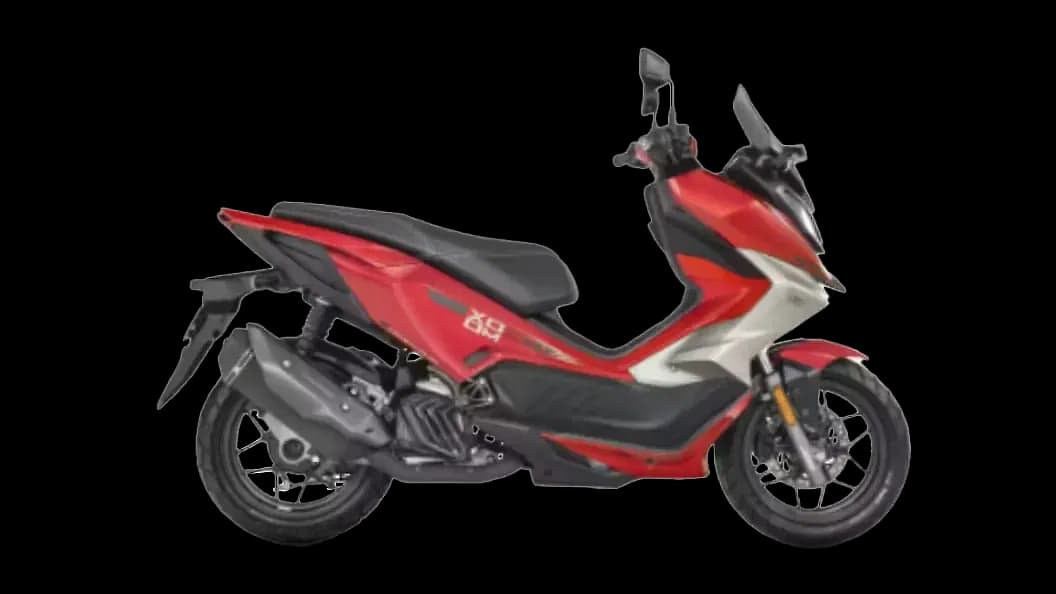
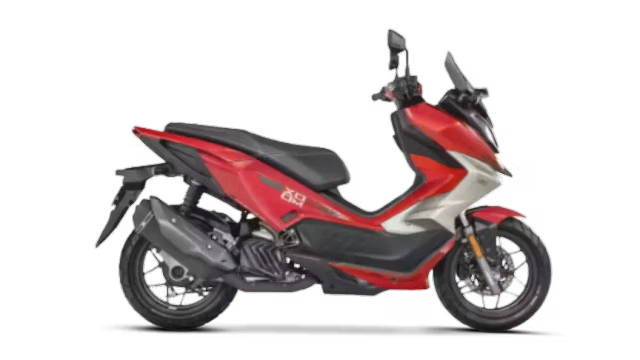
Hero Xoom 160
ZX
₹1.38 Lakh
Ex-showroom price
Longer Riding Range
The Xoom 160 offers a 287 km riding range on a 7-litre tank versus the RUV 350's 145 km, meaning fewer stops on long rides.
Stronger Front Braking
It gets a 240 mm disc front brake with a 2-piston caliper plus single-channel ABS, a more capable setup than the RUV 350's 130 mm drum front brake.
Quick Refueling
Petrol refueling takes minutes, avoiding the RUV 350's multi-hour charging times (5.15 hr for 0-80%).
Which one describes you?
Tell us how you drive. Your daily use changes the recommendation.
Personalised recommendation
Daily CommuterYour AI pick
BGauss BG RUV 350
For short office runs and traffic, the RUV 350's instant torque, zero running cost on charge, and CBS braking make daily grind easier, though the Xoom's petrol flexibility and disc front brake are solid too.
See Full ComparisonWhy BG RUV 350 for you?
Low running cost
Electric charging is far cheaper per km than petrol, which adds up on daily commutes.
Instant torque for traffic
160 Nm torque gives snappy starts at every signal, useful in stop-go city traffic.
Every vehicle has a different personality.
Find out how the BGauss BG RUV 350 and Hero Xoom 160 stack up across key factors and see what makes each of them unique.
What the shape reveals
The Xoom 160 leads on range and outright braking hardware while the RUV 350 pulls ahead on tech features, torque-driven performance feel and rider aids like cruise control and hill hold, reflecting the classic petrol-range vs EV-tech-and-torque tradeoff.
Instant High Torque
The PMSM motor delivers 160 Nm of torque, dramatically higher than the Xoom 160's 14 Nm, giving stronger off-the-line acceleration feel typical of EVs.
Multiple Riding Modes
Eco, Ride and Sport modes let riders tune performance and range, a flexibility the Xoom 160 lacks entirely with no riding modes.
Longer Riding Range
The Xoom 160 offers a 287 km riding range on a 7-litre tank versus the RUV 350's 145 km, meaning fewer stops on long rides.
Stronger Front Braking
It gets a 240 mm disc front brake with a 2-piston caliper plus single-channel ABS, a more capable setup than the RUV 350's 130 mm drum front brake.
Strengths that matter every day.
A side-by-side look at what each one does best, so you can choose what fits your needs.
BGauss BG RUV 350
Strengths for those who prioritise power, performance and features.
Instant High Torque
The PMSM motor delivers 160 Nm of torque, dramatically higher than the Xoom 160's 14 Nm, giving stronger off-the-line acceleration feel typical of EVs.
Multiple Riding Modes
Eco, Ride and Sport modes let riders tune performance and range, a flexibility the Xoom 160 lacks entirely with no riding modes.
Cruise Control & Hill Assist
It comes with cruise control, hill assist and reverse mode, conveniences absent on the Xoom 160.
Larger TFT Display
A 5-inch TFT display with brightness control and FOTA updates offers a more modern interface than the Xoom's LCD screen without OTA support.
More Under-Seat Storage
15 litres of under-seat storage plus document storage beats the Xoom 160's unspecified smaller storage, aided by not needing fuel tank space.
Hero Xoom 160
Strengths for those who prioritise range, safety and efficiency.
Longer Riding Range
The Xoom 160 offers a 287 km riding range on a 7-litre tank versus the RUV 350's 145 km, meaning fewer stops on long rides.
Stronger Front Braking
It gets a 240 mm disc front brake with a 2-piston caliper plus single-channel ABS, a more capable setup than the RUV 350's 130 mm drum front brake.
Quick Refueling
Petrol refueling takes minutes, avoiding the RUV 350's multi-hour charging times (5.15 hr for 0-80%).
Higher Top Speed
Top speed of 110 kmph outpaces the RUV 350's 75 kmph, useful for highway stretches.
Richer Instrument Features
It includes a tachometer-free but feature-dense LCD cluster with 2 tripmeters, automatic start-stop, and silent start not matched feature-for-feature by the RUV 350's single tripmeter setup.
Features that matter every day.
Instead of counting features, we compare which ones each vehicle actually includes.
Power & Performance
Battery & Charging
Brakes & Wheels
Suspensions & Chassis
Warranty and Services
Dimensions
Safety & Convenience
Mobile App Monitoring
Lights
Seat & Storage
Additional Features
Instrument Cluster